
The Indian economy is likely to slow down a little to 7.6 per cent in the fiscal year 2006 and 7.8 per cent in 2007 as consumption and investment may get affected due to higher inflation, Asian Development Bank said on Thursday.
Monetary tightening to contain overheating as well as inadequate infrastructure is likely to slow down India's growth to moderate 8 per cent next fiscal against the expected 9.2 per cent, the Asian Development Bank has forecast.
Asian Development Bank on Thursday pegged India's economic growth at 7.4 per cent for 2004 and said high growth is likely to be sustained in medium term.

UltraTech Cement was the top loser in the Sensex pack, shedding around 3 per cent, followed by M&M, HDFC Bank, IndusInd Bank, Axis Bank and Reliance Industries. NSE Nifty fell 50.80 points or 0.38 per cent to 13,478.30.

Stating that an economic recession gripped global economy following the lockdowns due to COVID-19 pandemic, Fitch Ratings on Friday said the initial disruptions to regional manufacturing supply chains in China have now broadened to include local discretionary spending and exports.
Painting a rosy picture, the Asian Development Bank on Tuesday forecast that the Indian economy would grow by 6 % in 2003 and 6.3% in 2004, and said fiscal deficit of the Centre and states would start falling after the elections next year.
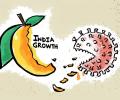
The International Monetary Fund (IMF) on Tuesday cut its economic growth forecast for India to 9.5 per cent for the fiscal year to March 31, 2022 as the onset of a severe second COVID-19 wave cut into recovery momentum. This forecast for 2021-22 is lower than the 12.5 per cent growth in GDP that IMF had projected in April before the second wave took a grip. For 2022-23, IMF expects economic growth of 8.5 per cent, larger than the 6.9 per cent it had projected in April.
ADB, however, has cut its growth forecast for developing Asia to 6.1 per cent from the earlier 6.3 per cent in view of subdued economic activity in the US and China.

Nepal's decision to ban the import of non-essential items amid depleting forex reserves may hit Indian exports. The country's central bank - Nepal Rastra Bank - last week instructed commercial banks not to open letters of credit (LCs) for importing non-essential items. This is to prevent further decline of the country's foreign exchange reserves. However, it has not issued any formal communication yet.
ADB too had projected Indian's economic growth for current fiscal at 7.6 per cent

Moody's Investors Service on Thursday slashed India's economic growth projection to 8.8 per cent for 2022 from 9.1 per cent earlier, citing high inflation. In its update to Global Macro Outlook 2022-23, Moody's said high-frequency data suggests that the growth momentum from December quarter 2021 carried through into the first four months this year. However, the rise in crude oil, food and fertilizer prices will weigh on household finances and spending in the months ahead.
However, India's economy will rebound to 8.5 per cent in 2009-10, Manila-based Asian Development Bank said in its Asian Development Outlook 2008. Narhari Rao, Principal Economist with India Resident Mission of ADB, said recent duty cuts by the government to arrest inflation, which is racing towards 7 per cent, are likely to show results in 2-3 weeks.

With the world's worst outbreak of COVID pandemic stalling a nascent economic recovery, the government has begun assessing the impact of the second wave of infections on different sectors and may look at providing support at an appropriate time to segments requiring fiscal help. Some of the economic indicators, including the Goods and Services Tax (GST) collections, still provide confidence and incoming data will throw some more light on the state of the economy, sources said. Services sectors like hospitality, tourism and aviation which had just started recovering were hit hard by the second wave of COVID, the sources said, adding these segments might need some support on an urgent basis from the government.
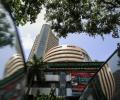
The 50-issue NSE Nifty in range-bound movements settled higher by 59.15 points, or 0.58 per cent, at 10,252.10.

Fitch Ratings director Thomas Rookmaaker said India's debt-to-GDP ratio is likely to rise to 76 per cent from 70 per cent currently due to wider fiscal deficit and low economic growth.
Most forecasts do not have a track record of transparency and accuracy

There are various projections about India's growth.
 © 2026 Rediff.com - Advertise with us - Disclaimer - Privacy Policy - Sitemap - Feedback - About us - Terms of use - Grievances